2 December 2011

A Case of Forsaken Identity

I have been loathed to adopt the term 'jeweller' to describe my practice. Coming from a family of goldsmiths and fine jewellers, the term is loaded for me. On my foundation course, many years ago, both of my tutors (the wonderful Terry Shave and Kay Maclaurin) encouraged me to pursue jewellery at art college, yet I resisted and scuttled off to Hull to study Fine Art. Here I am, years later, still wearing the same label, but only now can I read it for myself. 

I am Vanda Campbell, and I make jewellery.


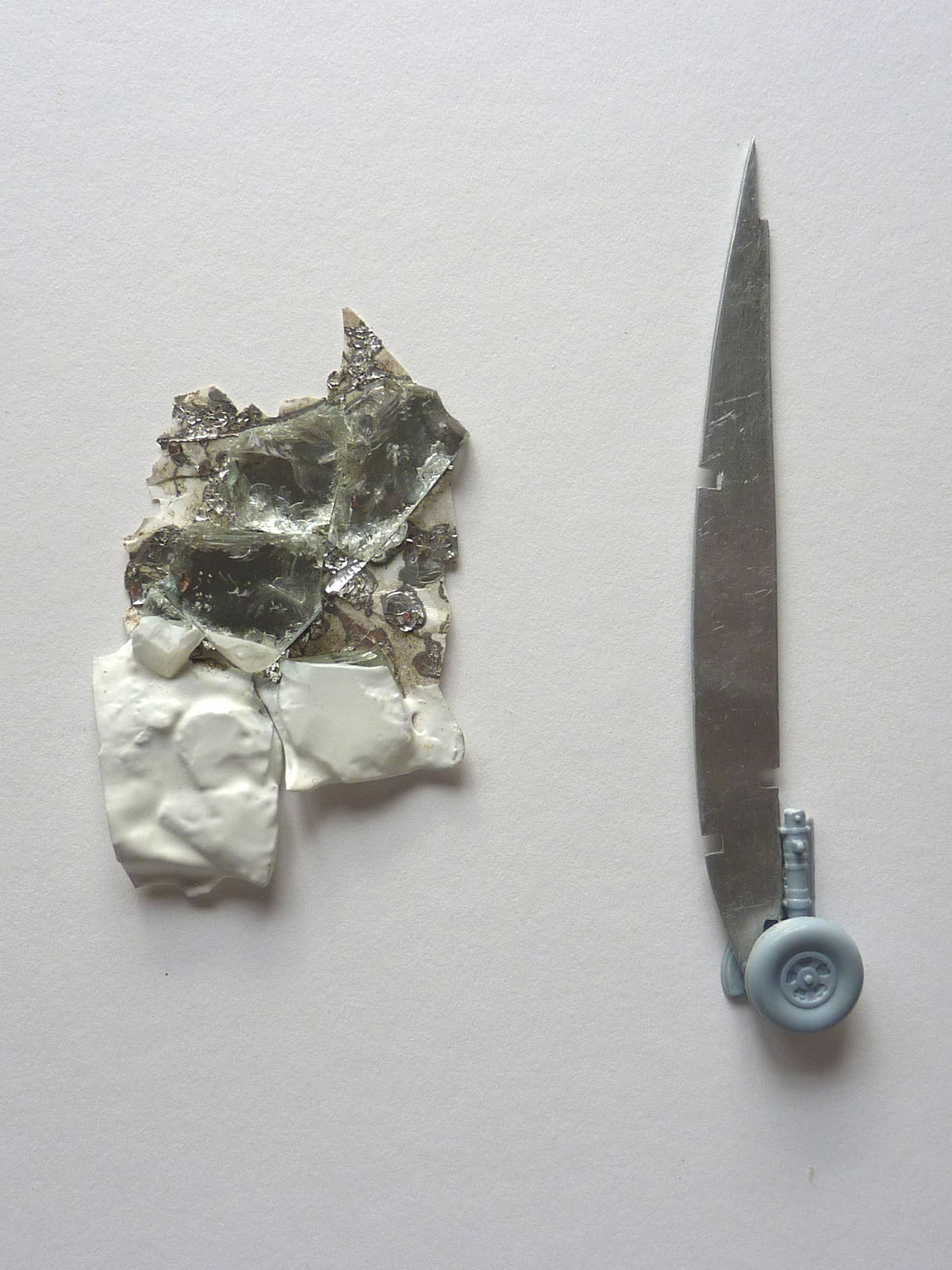
Cutting Edge,Found Object, Steel, Thread 2010 © Vanda Campbell
Cut Glass Found Object, Glass, Thread 2010 © Vanda Campbell
From the Chatelaines Collection, 2010
                                                        

1 December 2011

Keeping it dirty

The materiality of stuff continues to intrigue me.  The juxtaposition of leather with glass, plastic and china, linen and metal etc., creates an aesthetic, which has the potential to be more exciting to me than the individual elements.

I have been working on responses to my plastic dipped found objects, and trying to identify my methodology in the early stages of a new body of work.  The responses, also from found objects, have the potential for an awkwardness which is harder to achieve if I have complete control over the form of the objects I use.    This need for awkwardness, clumsiness, even ugliness, is an effective counterbalance to the undesirable response of 'twee' which seems to curse jewellery so easily.  Could this awkwardness be the 'dirty' that Marty St James (Professor of Fine Art at University of Hertfordshire) keeps alluding to?!


The potential for awkwardness is even greater when two responses are joined to create a third response.


27 November 2011

White becomes resolution

The paintings of Cy Twombly have been known to move me to tears.  When I first encountered his early works on paper (at an exhibition in Cork Street in the early 80s) I was struck by his mastery of awkwardness - media collided on paper, and his drawings and paintings had a wonderful imbalance that challenged everything I previously understood to be 'right' in art.

Bacchanalia-Fall (5 Days in November) Blatt 4, InvNr. UAB 457, 1977 
Collage, oil, chalk, gouache, on fabriano paper, graph paper, 101.2 x 150.5 cm
Bayerische Staatsgemäldesammlungen – Museum Brandhorst, München. Leihgeber: Udo Brandhorst. © Cy Twombly

At his recent show at the Dulwich Picture Gallery, there was the opportunity to get close to his sculptures.  Found objects are cast in bronze, and then painted in white household paint, which manages to somehow both conceal the original forms, yet reveal even more of them.  The exhibition notes referred to Twombly's explanation of his use of white paint as his 'marble'.  I love the idea that a material as cheap and everyday as white emulsion paint can allude to the grandeur of Italian marble sculptures of old.

Untitled (Funerary Box for a Lime Green Python) 1954 Cy Twombly

So, how does this relate this to my own practice?  An essential requirement of the found objects I select is ambiguity.  Broken, discarded fragments of someone's once worldly possession, these objects no longer have their original form, and are unable to fulfil their original function. I am intrigued by the notions of value and status, and find myself continually drawn to the work of many European contemporary jewellers, whose practices explore these ideas, amongst others.  One way of challenging the concepts of value and status in jewellery would be to replace precious metals and stones with cheap, everyday materials, such as plastic.  

Found objects, plastic, 2011 Vanda Campbell

Found object, plastic (detail), 2011 Vanda Campbell

Found object, plastic (detail), 2011 Vanda Campbell

26 November 2011

Madame Cholet goes shopping

Saturday morning, walking through a car park and crouching to pick up the first treasure of a day (the 'pull' from a zip), I realised the Wombles have a lot to answer for ... 


♫ Making good use of the things that we find, the things that the everyday folk leave behind ... pick up the pieces and make them into something new, that's what we do ♫  

The Wombles pride themselves on turning rubbish into useful things, whereas for me, function is the least of my concerns, and I suspect I might not be alone in being under their influence.
Has anyone investigated the legacy of the Wombles on the contemporary art scene I wonder?  Could Hans Stofer, in fact, be Great Uncle Bulgaria?!

Hans Stofer, Off My Trolley, 2009

25 November 2011

Drawing on ideas

WHAT HAPPENS NEXT ... (or how I develop ideas)
My practice is constantly evolving, and rather than starting afresh with each new project, I find I return to recurring themes and ideas, as I attempt to make sense of the world around me.  In the early stages of a new body of work, drawing is essential.  It provides an excuse to stop, think, observe and reflect.  I love the physical action of leaving marks on paper, and the unexpected effect of mixing materials often results in a glorious frisson.

Untitled (detail), mixed media, 2011

For me, drawing can be meditative, almost cathartic, and allows an opportunity for the subject to find its voice. It is through drawing that I really start to see my source material, as the drawing exposes lines, forms, patterns and connections that are initially hidden.  

Jasper Johns summed up the process ... "Sometimes I see it and then paint it, other times I paint it and then see it." Jasper Johns (Sixteen Americans, Dorothy C. Miller, MoMA, New York, p. 22).

I think I probably do both.

24 November 2011

Oh, to be a turnupstuffer

I'm loving the MA course, and am finding more and more ways of investigating both my practice and the practices of my contemporaries.  I'm still unsure of what exactly it is that I do, or make, but continue to feel compelled to do it nonetheless.  In a bid to try to understand who, or what I am, I have been asked to answer some crucial questions, which I hope will provide me with an insight into my methodology.  I will probably revisit these questions as the weeks progress, so reserve the right to change my answers ... a little, or maybe a lot!

IN THE BEGINNING ... (or "How do I generate and evaluate new ideas?)
I've been repeatedly renewing a book from the library lately - Found treasures: Hermann Jünger and the Art of Jewelry (Thames & Hudson, 2001).  

Hidden (well, not really hidden, but given a page of its own, with a virtual trumpet attached) is a quote from Pippi Longstocking ...


"A turnupstuffer." "What's that?" asked Tommy. "Somebody who finds the stuff that turns up if only you look, of course. What else would it be?" said Pippi. "The whole world is filled with things that are just waiting for someone to come along and find them, and that's just what a turnupstuffer does."
Astrid Lindgren,
'Pippi Longstocking'


So, it's official, my practice does have a name, and at the moment I am mostly a turnupstuffer.  For my methodology starts with collecting ... broken fragments of life, unable to fulfil their original function, and no longer with a recognisable form.  Usually man-made, small-scale, and with an unexpected twinkle, I am compelled to stoop to rescue them from the gutter.  


Turned up stuff, 2011

14 October 2011

7 days, 7 finds, 7 chains of office

Its been a while since I posted, but the start of a new term on a new course (MA Applied Arts), made me think think it's about time I sharpened my virtual pencils!  So here we are, the result of our first mini 'getting to know you' project where we were asked to record how we responded to the environment over a period of 7 days.  I spend most of my days walking with my eyes focussed on the ground looking for treasure ... so, here's this week's collection, rescued from the gutter and given a new identity.